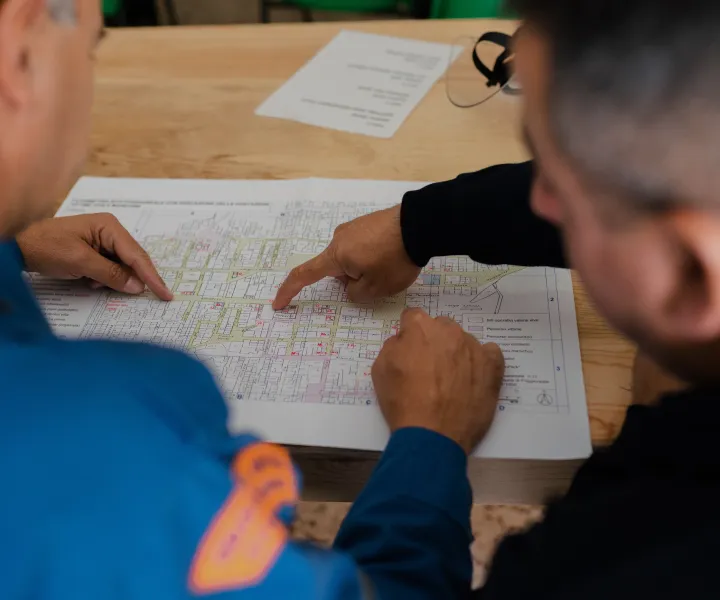
The Real Cost of "Free" Inspections

Subscribe: The Board Brief
Quarterly, practical guidance for HOA boards & property managers. No fluff — just field-tested insight.
The Real Cost of “Free” Inspections
Written by Paul Reeves | Field Insights | April 2026
The Offer That Sounds Too Good to Question
“Free inspection.”
For HOA boards under pressure to understand aging assets, this offer can feel like a gift: no upfront cost, quick answers, a path toward getting numbers.
But after decades of working with HOAs, here is the truth: free inspections are rarely free. The cost just shows up later — in scope, schedule, risk, or disputes.
Why Contractors Offer Free Inspections
Contractors don’t offer inspections out of generosity. They offer them because inspections are often a sales gateway.
A free inspection typically means the inspection is designed to support a bid, the findings are filtered through the contractor’s trade scope, and the outcome is framed to justify a specific solution.
That doesn’t make contractors dishonest — it just means their incentives matter. Boards should understand what they’re actually receiving.
The Hidden Costs Boards Don’t See at First
1. Biased Findings (Even When Unintentional)
A contractor evaluates conditions through the lens of what they install, what they repair, and how they typically solve problems. That perspective may miss root causes, alternative solutions, phasing or partial repairs, and scope reductions that don’t benefit the bidder.
The inspection isn’t neutral — it’s directional.
2. Over- or Under-Scoping
Free inspections often result in scopes that are either overly broad “to be safe,” or narrowly focused on the contractor’s specialty. Both create risk.
Over-scoping leads to inflated budgets, unnecessary disruption, and resident pushback. Under-scoping leads to change orders, schedule extensions, and disputes mid-project. Either way, the board pays.
3. False Confidence in Early Numbers
Boards may walk away thinking: “At least we have a number.” But when that number is built on assumptions not documented, conditions not validated, and a scope still evolving — it’s not a planning number. It’s a placeholder.
4. Increased Liability Exposure
If a project later runs into trouble, boards may be asked: Why was this scope chosen? What alternatives were considered? Who validated these assumptions?
“Because the contractor told us” is not a defensible answer. Free inspections often leave boards without documented rationale, independent validation, or a clear decision trail. That creates exposure when things go wrong.
What Independent Evaluation Actually Provides
Independent inspections or advisory reviews do something different: they separate evaluation from pricing, identify what’s known vs. assumed, clarify scope options and tradeoffs, and help boards decide before bidding.
The goal isn’t more reports. It’s better decisions.
When “Free” May Be Acceptable — and When It Isn’t
A free inspection might be reasonable for minor, low-risk maintenance, exploratory conversations, or early awareness only.
The higher the risk, the more expensive “free” becomes.
.jpeg)
“Free inspections don’t save money. They shift cost — from upfront clarity to downstream risk.”
A Word from Paul
One thing that can muddy the water is loyalty — and I get it. When a board has worked with the same contractor for years and it’s gone well, it’s natural to trust their “free” inspections.
The problem usually shows up when a second contractor enters the picture — a new trade, a new team, or even the same trade under different conditions — and their recommendations don’t align. That doesn’t automatically mean someone is dishonest. More often, it means the assumptions, lens, and incentives are different.
Another common pitfall is inspections that happen without a clearly defined scope. For example, a contractor may be evaluating dry rot repairs for SB 326 balconies, but no one has clarified that guardrails may also need to be brought up to current code. When details like that are missed early, they often reappear later as major surprise costs.
A practical middle ground is to pay for the inspection. Some contractors already offer this, and many more will if asked: you pay an inspection fee, and if they’re awarded the project, that fee is credited back. It changes the dynamic — the contractor is compensated for their time, the evaluation is more thoughtful and documented, and if you don’t move forward, it isn’t a total loss on either side.
And if a board wants to bypass this issue entirely, Reeves Construction Advisors can evaluate conditions first. Because we don’t bid the construction work, boards get an impartial assessment, a scope built around what the property actually needs, and a clear decision trail before contractors ever price the job.
Get an independent set of eyes
Before your next inspection goes out to a contractor.
We evaluate conditions, define scope, and help boards make defensible decisions — before bids are ever issued. No construction conflict of interest.
Schedule a Call with Paul