Q2 Board Brief | ChatGPT Said They Could Do It Themselves


Subscribe: The Board Brief
Quarterly, practical guidance for HOA boards & property managers. No fluff — just field-tested insight.
ChatGPT Said They Could Do It Themselves
Written by Paul Reeves | Q2 Board Brief | April 2026
A board got my proposal a few weeks ago. Dry rot inspection, scope development, construction oversight. Multiple 1960s buildings. The kind of job where what you see on the surface is almost never the whole story.
They thought the fee was too high. So they did what a lot of boards are doing now — they asked ChatGPT whether they could handle it themselves. ChatGPT said yes. A board member volunteered to take it on.
The property manager told me privately he thought it would be a disaster. He is probably right. But he can only do what the board instructs.
I am starting to hear this "AI can do it for us" trend from other people in the industry too. It is becoming a pattern. So I want to talk about it directly — not to tell you AI is bad, but to be honest about what it actually knows and what it does not.
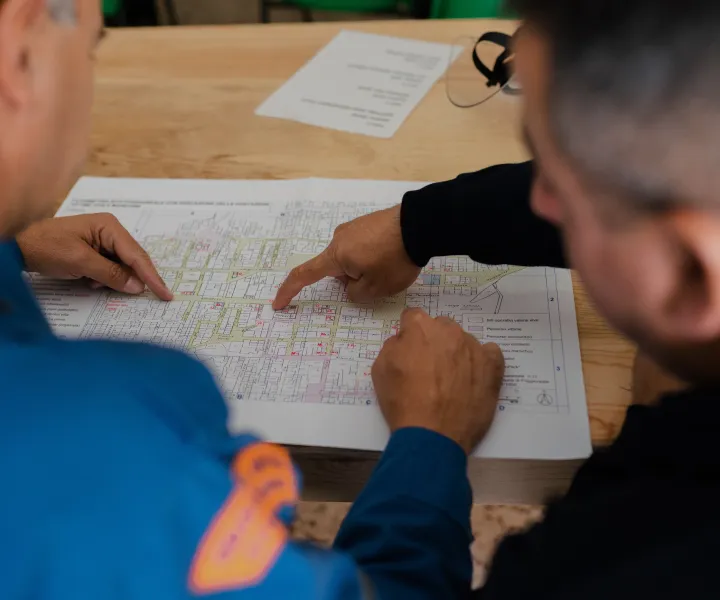
.jpeg)
"It was not wrong about the steps. It was wrong about everything underneath the steps."
We Have Been Here Before
I was talking about this with an electrical contractor I have worked with for years. He said it reminded him of when Google first took off. Everybody would search their problem, get an answer, and then call you to tell you what they wanted done and what it should cost. You would spend the first part of every conversation unwinding what they thought they knew.
AI is the same pattern. It just sends people further down the wrong path, faster. And it takes a lot longer to unwind because the answers are more detailed, more confident, and harder to argue with.
The board that chose to self-manage their project did not do it because they were reckless. They did it because AI gave them a reasonable-sounding process and that process made the job look manageable. It was not wrong about the steps. It was wrong about everything underneath the steps.
What AI Gets Wrong
Let me give you some real examples. Not hypothetical ones.
The inspection report is not the scope.
I have seen boards take a pest inspection report, cut and paste it into a bid package, and send it out to contractors. The pest report lists the rotted wood. It does not include the trim that has to come out to access the siding, or the material that has to be removed just to complete the repair. When a contractor starts pulling back siding on a 1960s building and finds what is actually there, the cost doubles or triples. Nobody caught it before the bids went out because nobody walked the building with the scope in hand.
The engineer's inspection is not a construction scope.
On one SB 326 deck and balcony rebuild, the board sent out the engineer's inspection as the scope of work. It did not include the code upgrades required for the stairs and railings, and it listed only the rotten wood — not the other material that had to come out for access. By the time the project was well underway, the board had been approving change orders one at a time without anyone running a total.
One line item is never just one line item.
I worked on a deck project where the scope said to replace a two-by-eight deck support. Straightforward on paper. But to get to the support, the deck top had to come out. Then the railing. Then the outer rim joist around the perimeter — which looked fine in the pictures, but once you started pulling it, it was in too bad a condition to put back. And when we got to the railings, they were no longer up to current code, which meant they had to be replaced regardless. One line item became a full deck rebuild. Nothing that happened was a surprise to anyone with field experience. All of it would have been invisible to a board relying on AI to scope the job.
The damage almost never stops where the inspection shows.
Dry rot follows moisture, and moisture follows paths that do not show up on a surface inspection. When I walk a building I am not just looking at what the report flagged. I am asking why it is damaged, what caused it, and whether there is something upstream that will keep causing the same problem if we do not fix it. Boards that have been repairing the same area over and over for years are usually dealing with this — a flashing detail, a drainage issue, roofing that is not properly vented, windows that were never correctly flashed. The repair keeps failing because nobody fixed the source.
Change orders are where boards get into real trouble.
When one comes in, someone needs to evaluate whether it is actually necessary. A volunteer board member managing the project has no independent baseline, no documented site conditions from before work started, and no construction experience to push back with. Most boards just approve it. I have seen projects where change orders were being approved one by one and nobody was running a running total. The association ended up short on reserves at completion and had to arrange payments to the contractor. That is not just a budget problem. That is a board liability problem.
There are things on these properties that AI will not warn you about.
The moment you disturb certain materials on a building this age, you are in asbestos and lead paint territory. Contractors washing debris into street drains can generate environmental fines that are serious and real. The association needs certifications, testing, and documentation — all of it on file. If a board volunteer is managing the project and this gets missed, the exposure is significant. Not just financially.
The Argument I Keep Hearing
Someone said this to me recently and I had to think about it for a second because of how logical it sounded on the surface.
"ChatGPT will tell us what to look out for. And if we make a mistake and get a fine, it will still cost less than what you charge us."
Another version: "We are going to get change orders whether you are on the project or not. We will just take a picture and upload it to AI. It will tell us whether the change order was really necessary."
I understand the math they are doing. What they do not know is how large those fines can actually get. And AI evaluating a contractor's change order from a photograph is not the same thing as someone who has been on that property, documented the original scope, and knows exactly what was and was not in the contract.
The argument is not crazy. It is just missing the part where things go wrong in ways nobody mentioned when AI said yes.
A Few Questions Worth Asking Before Your Next Project Decision
Before your board approves a scope, issues an RFP, or decides to handle something in-house, these are worth having real answers to:
AI will answer all of those questions confidently. It has no liability when the answers are wrong.
What I Actually Do
If you have a project coming up, here is what working with me looks like:
I walk the property and tell you what I actually see — not what the inspection report summarizes, but what is there. I write you an independent scope of work, built around your specific buildings and conditions, not cut and pasted from another document. I manage the bid process and equalize what comes back so your board is comparing the same job across every contractor, not three different interpretations of it. And I am there when the contractor finds something behind the wall that was not in the contract — to evaluate it, negotiate it, and document it so the board has a defensible record of every decision made.
There's no AI who can do that.
It Is Already Q2
If your association has a project this year, the time to have a planning conversation is now — before the RFP goes out. Scope development, bidding, permitting, and contractor scheduling all take longer than most boards expect. Boards that wait until late spring to start are already behind.
I am happy to take a look at where you are and tell you what I see. No obligation.
We're here to help
Have a project coming up this year?
I'll walk the property, write an independent scope, and be there when things get complicated. Let's talk before the RFP goes out.
Schedule a Call with Paul